
Whole Animal Cooking:
Every animal deserves our full attention.
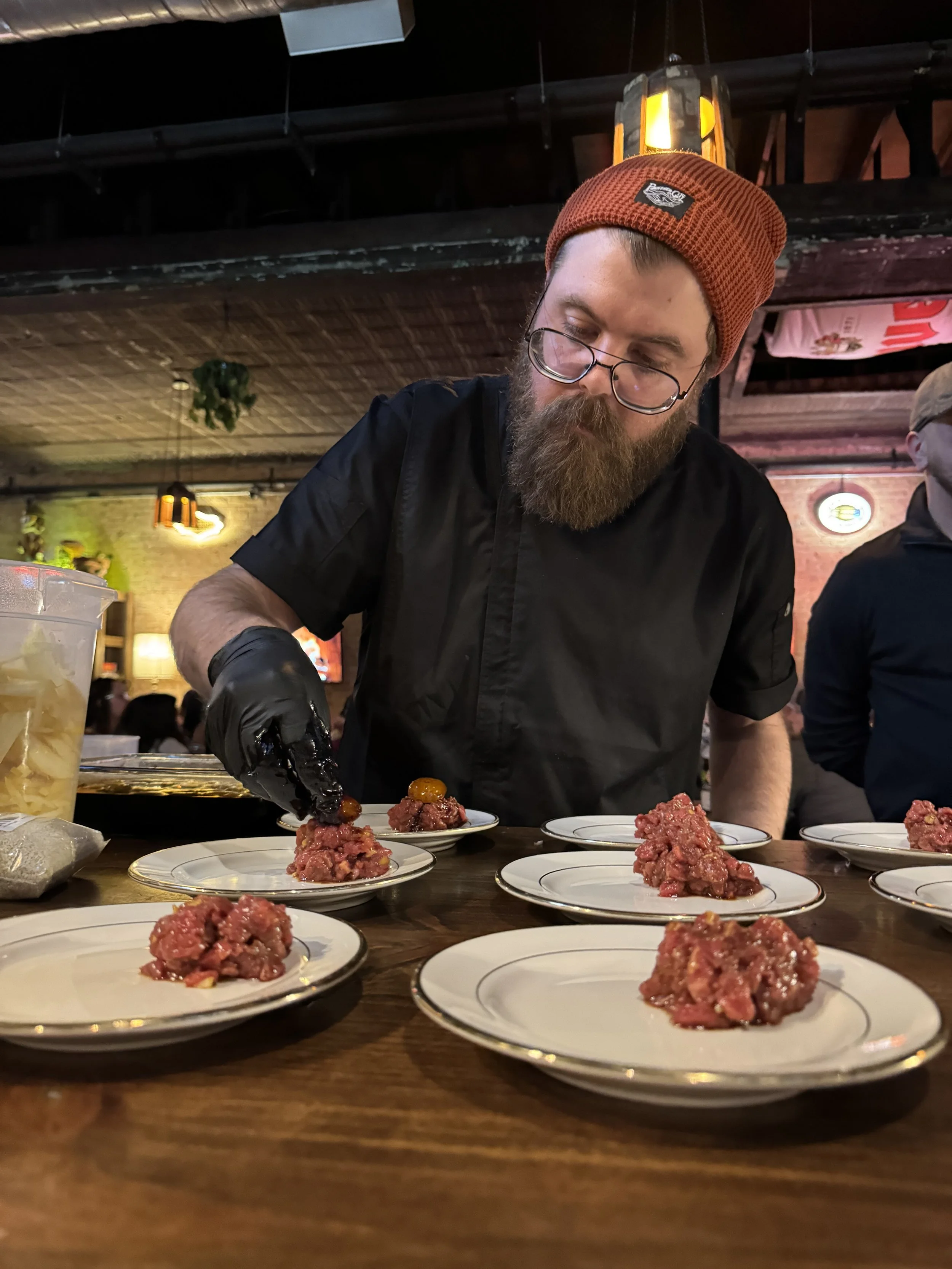
That belief sits at the heart of how we approach meat at Priory. Whole animal cooking is more than a technique or a trend—it is a practice of stewardship. It asks us to honor the life of an animal by using as much of it as possible, treating every cut with care rather than chasing only the most familiar or expensive pieces.
For generations, this was simply how people cooked. Before industrial butchery and neatly packaged cuts, cooks learned to work with whatever the animal offered. A feast might begin with grilled chops, continue with braised shoulder, become sausage the next day, and finish as broth simmered from roasted bones. Fat was rendered. Skin was crisped. Liver became pâté. Blood became sausage. Nothing was wasted because everything had value.
We believe there is wisdom in returning to that way of thinking.
Modern food culture often encourages us to see meat as anonymous. A steak arrives without reminding us it once belonged to an animal. Chicken breasts become detached from the bird itself. Prime cuts are celebrated while everything else is overlooked.
Whole animal cooking tells a different story.
It reminds us that meat is not simply a product—it is the result of a life, a farmer's work, and a cook's responsibility. That understanding naturally changes the way we prepare it and the gratitude with which we serve it.
This approach also makes us better cooks.
When you purchase whole animals instead of individual cuts, you don't get to design the menu around convenience. The menu must respond to what is available. One week we may have beautiful pork loins. The next week we may be slow-cooking shoulders, smoking hocks, roasting necks, or curing jowls.
Rather than seeing those as limitations, we see them as invitations to become more creative.
A shoulder teaches patience.
A shank teaches restraint.
Bones teach us to build stocks with depth and character.
Fat teaches us that flavor often begins long before seasoning.
The less glamorous cuts often become the most memorable dishes because they reward cooks willing to invest time instead of shortcuts.
Time is one of our favorite ingredients.
Many of the world's greatest dishes exist because someone refused to waste part of an animal. Ragùs, terrines, pâtés, confit, smoked sausages, ramen broths, tacos de lengua, barbecue, cassoulet, tonkotsu, head cheese, and countless regional specialties all grew from cooks asking the same question:
"What can we make with what we have?"
That spirit continues to inspire our kitchen.
At Priory, whole animal cooking doesn't mean every guest will encounter unusual ingredients every time they visit. Some days it may simply mean an incredible roast chicken, a perfectly grilled pork chop, or slices of house-cured ham.
Other days it may mean smoked beef heart, chicken liver mousse, pork coppa, grilled tongue, crispy skin, bone marrow, or handmade sausage.
The goal is never novelty.
The goal is respect.
We don't serve unfamiliar cuts because they're shocking or adventurous. We serve them because they're delicious, deeply rooted in culinary tradition, and deserving of the same attention as any premium steak.
Whole animal cooking also shapes our relationship with local producers.
When possible, we want to work with farmers who raise animals thoughtfully and humanely. Buying whole animals allows us to support those farms more completely while building menus around the realities of their work instead of asking them to produce only the cuts the market prefers.
That relationship matters to us.
Hospitality begins long before a guest arrives. It begins with the people who grow grain, raise livestock, brew beer, mill flour, and harvest vegetables. We want our purchasing to reflect the same values as our cooking: patience, integrity, and care.
This philosophy naturally leads us toward preservation.
Some cuts are cured for weeks before they're ready to serve. Others become smoked sausages, salami, or charcuterie. Bones simmer into stocks that form the foundation of soups, sauces, and braises. Fat is rendered for roasting vegetables or enriching doughs. Even trim finds new purpose in dumplings, meatballs, fillings, and ragùs.
Waste becomes opportunity.
The result isn't just sustainability—it is flavor.
The deepest broths come from roasted bones.
The richest sauces come from long reductions.
The most memorable sausages come from balancing lean meat with carefully rendered fat.
Every part contributes something different.
This way of cooking also slows us down.
Whole animal butchery cannot be rushed. It demands planning, skill, repetition, and humility. Every animal is slightly different. Every season changes what feels appropriate to cook. Every butcher continues learning.
We like that.
Priory isn't interested in becoming faster simply for the sake of speed. We'd rather become more attentive.
Whole animal cooking teaches exactly that.
It teaches us to notice.
To sharpen our knives well.
To respect craftsmanship.
To value abundance over excess.
To remember that every ingredient carries a story.
Ultimately, this philosophy reaches beyond meat.
It shapes how we think about vegetables, grain, beer, and hospitality itself.
We try to use the whole vegetable, not just its prettiest leaves. We save bread for crumbs, croutons, and stuffing. We preserve herbs at their peak. We brew relationships the same way we brew beer—patiently, intentionally, and with room for transformation.
Whole animal cooking reminds us that the most meaningful work often happens in the overlooked places.
Not every guest will notice the stock simmering in the background, the sausage hanging to cure, or the careful butchery that happened days before service.
That's okay.
Those quiet acts of care become part of the meal whether they're seen or not.
Because in the end, whole animal cooking is not about using everything simply because we can.
It's about gratitude.
Gratitude for the animal.
Gratitude for the people who raised it.
Gratitude for the cooks who transformed it.
And gratitude for the opportunity to gather around a table where nothing—and no one—is treated as disposable.