
Seasonal Cooking:
The menu at Priory is never finished.
It changes because the world around it changes.
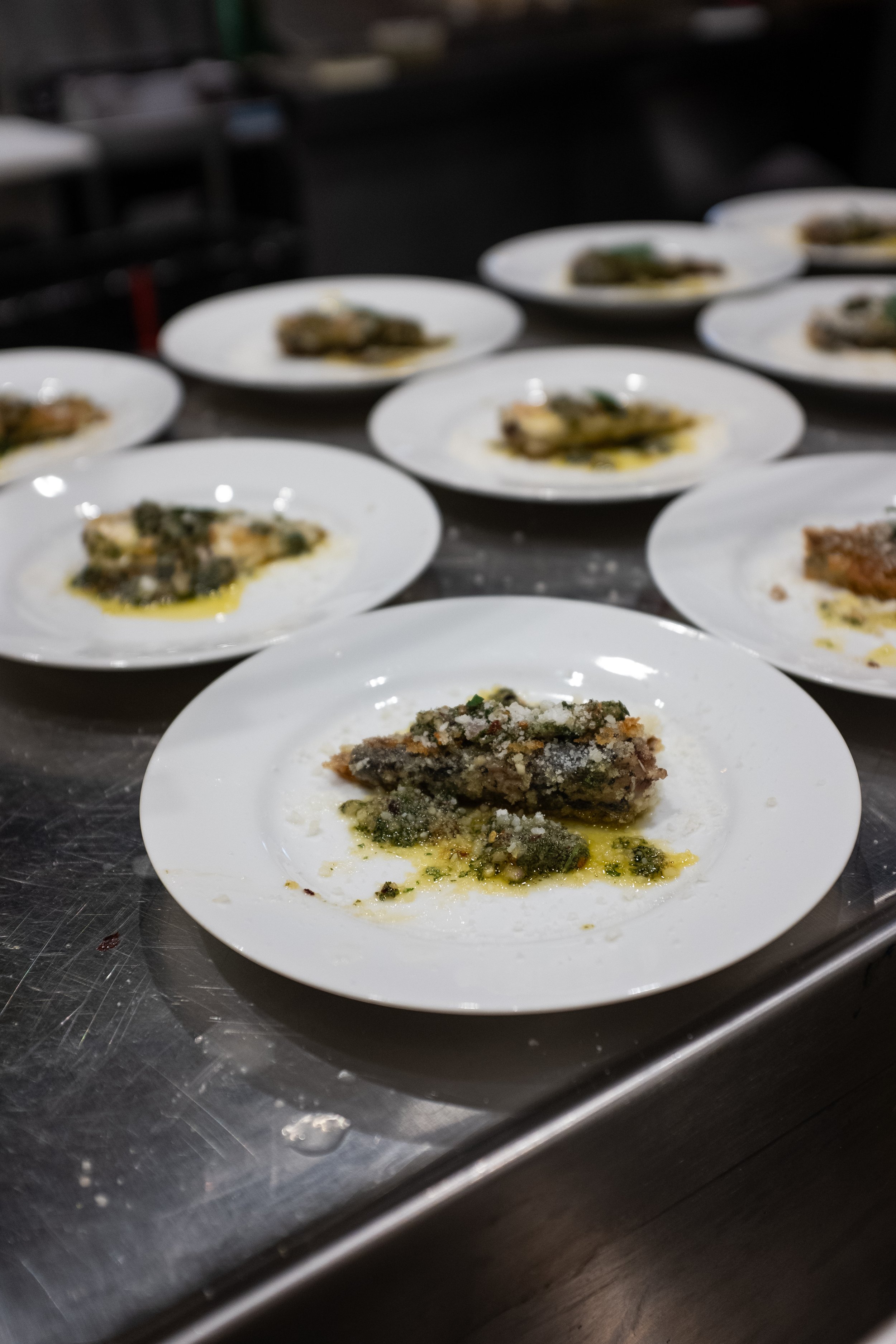
Tomatoes reach their peak and then disappear. Mushrooms arrive with the rain. Stone fruit comes for a few brief weeks before making way for apples and persimmons. Spring onions give way to peppers. Summer herbs become winter roots. Every season carries its own rhythm, and we believe our cooking should move with it rather than against it.
Seasonal cooking is one of the oldest ideas in the world.
For most of human history, there was no alternative.
People cooked what the land offered, preserved what they could, and waited for the next harvest. Menus weren't designed months in advance. They were shaped by weather, patience, and the realities of agriculture.
Modern technology has made nearly every ingredient available throughout the year, and there is genuine value in that abundance. But abundance can also flatten our experience of food.
If strawberries taste the same in December as they do in May, we begin to lose the joy of anticipation.
If asparagus never disappears, we forget what makes it special.
At Priory, we believe part of the pleasure of eating comes from waiting.
The first tomato of summer should feel different because you've gone months without one.
The first bowl of roasted squash should announce that autumn has arrived.
The first citrus of winter should brighten the darkest days of the year.
Seasons create memories.
Food helps us remember them.
That's why our menu is built around ingredients instead of recipes.
We don't begin by asking, "What dishes should stay forever?"
We ask, "What deserves our attention right now?"
Sometimes the answer is sweet corn.
Sometimes it's oyster mushrooms.
Sometimes it's peaches.
Sometimes it's cabbage.
The ingredient leads.
We follow.
That doesn't mean every dish changes every week. Some preparations return year after year because they belong to a particular season. Guests begin looking forward to them the way people look forward to the first cool evening after a Texas summer.
Those returning dishes become traditions rather than permanent fixtures.
We like that.
Tradition doesn't require permanence.
It requires rhythm.
Seasonality also makes us better cooks.
When an ingredient is only available for a short time, we pay closer attention. We taste it more carefully. We build menus around its strengths instead of asking it to become something it isn't.
A ripe tomato doesn't need twenty ingredients.
A perfect peach doesn't need elaborate technique.
Fresh peas don't need to be hidden beneath heavy sauces.
The best seasonal cooking often comes from doing less.
That idea has been deeply influenced by Japanese cuisine.
One of the things we admire most about Japanese cooking is its reverence for the moment. Rather than forcing the same dishes throughout the year, many Japanese meals quietly celebrate what has just arrived.
The season itself becomes part of the flavor.
That perspective has shaped Priory in profound ways.
We're less interested in creating signature dishes than in becoming the kind of kitchen that notices.
Notices when blackberries arrive.
Notices when local mushrooms begin appearing.
Notices when the first cool mornings invite braises instead of salads.
Notices when guests are ready for lighter beer or darker beer.
Attention is the foundation of hospitality.
Seasonality also reminds us that limits create creativity.
When tomatoes disappear, we don't complain.
We begin asking what comes next.
That question keeps us learning.
It keeps us from relying on habit.
It keeps the kitchen alive.
Many of our favorite ingredients don't simply disappear when their season ends.
They transform.
Summer peppers become fermented hot sauce.
Tomatoes become preserves and pickles.
Herbs become vinegars.
Fruit becomes jam.
Cabbage becomes sauerkraut.
Milk becomes cultured butter.
Grain becomes bread and beer.
Seasonal cooking naturally leads to preservation.
In that sense, fermentation becomes one way of extending the season without pretending it never ended.
We aren't trying to defeat time.
We're learning to work with it.
This relationship with the seasons also changes our relationship with guests.
When someone asks, "Will that dish be here next month?" the answer is often no.
Not because we enjoy taking favorites away, but because we want every visit to feel connected to a particular moment in the year.
The meal becomes a snapshot.
You remember the spring dinner because of the peas.
The autumn dinner because of roasted mushrooms.
The winter dinner because of smoke and citrus.
The summer dinner because tomatoes tasted exactly as they should.
Food becomes memory.
Memory becomes hospitality.
Beer follows the same rhythm.
A bright pilsner feels different in July than it does in January.
Dark lagers belong to cool evenings.
Fresh-hop beers capture a fleeting harvest.
Mixed-fermentation beers evolve over months and years.
Even the beer menu participates in the seasons.
We think that's beautiful.
Seasonality also encourages us to build stronger relationships with farmers, ranchers, brewers, millers, and producers.
Instead of demanding every ingredient all year long, we ask them what is thriving.
We listen.
We adapt.
The result is better food and healthier partnerships.
It also reminds us that restaurants do not exist apart from agriculture.
Every meal begins somewhere else.
In a field.
On a ranch.
In an orchard.
In a grain silo.
In a brewery.
In a mushroom patch.
Cooking starts long before we light the fire.
Perhaps the greatest gift of seasonal cooking is that it teaches gratitude.
When something only appears for a few weeks, we receive it differently.
We don't take it for granted.
We savor it.
We share it.
We know it won't last forever.
That awareness changes the meal.
It also changes us.
At Priory, we hope our guests leave with more than a full stomach.
We hope they leave a little more attentive.
To the weather.
To the changing light.
To the ingredients growing nearby.
To the people whose work made dinner possible.
To the seasons unfolding around them.
Because the menu is never really about what's on the plate.
It's about learning to notice the world as it changes.
The seasons are always telling a story.
Our job is simply to cook the chapter we're living in.