
Texas & Japan:
People often ask if Priory is a Japanese restaurant.
The answer is no.
Others ask if we're a Texas restaurant.
That isn't quite right either.
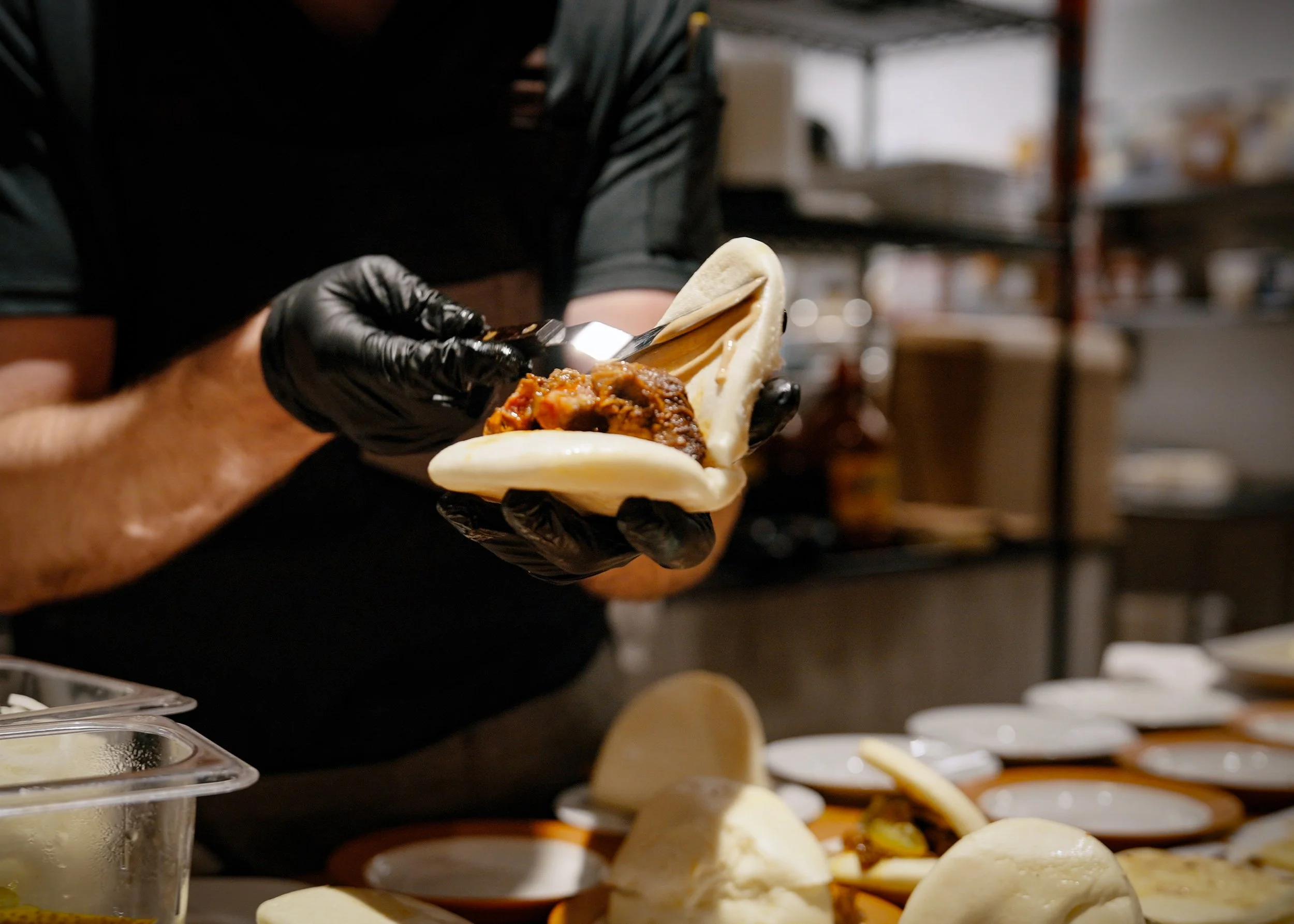
Priory is a Texas kitchen shaped by Japanese ways of thinking.
There is an important difference.
We aren't trying to recreate another country's cuisine. We aren't interested in imitation, costume, or novelty. We have tremendous respect for the depth and history of Japanese cooking, and that respect begins with recognizing that we are outsiders looking in.
Instead of trying to become something we are not, we ask a different question:
What can Texas learn from Japan?
That question has shaped nearly every part of Priory.
Not just the food, but the way we work.
The way we cook.
The way we serve.
The way we think about time.
Long before Priory existed, we found ourselves drawn to Japanese craftsmanship. There is a quiet humility in it. The belief that ordinary work deserves extraordinary care. The understanding that repetition is not boring but formative. The willingness to spend years improving something that most people will only notice for a few seconds.
Sharpening a knife.
Cooking rice.
Making dashi.
Grilling a skewer.
Pouring a beer.
These are treated with seriousness because they matter.
We believe Texas understands this instinct too.
The best barbecue isn't famous because it's complicated. It's famous because someone spent decades learning how to tend a fire.
The best bakeries aren't defined by trends but by consistency.
The best ranchers understand stewardship.
The best brewers know that fermentation cannot be rushed.
When we look closely, Texas and Japan begin to share a common language.
Respect for ingredients.
Respect for labor.
Respect for tradition.
Respect for time.
That is where Priory lives.
You'll find Japanese influence throughout our kitchen, but it rarely arrives in obvious ways.
It might be miso folded into butter.
Koji used to deepen the flavor of vegetables or meat.
Togarashi bringing warmth instead of overwhelming heat.
Dashi lending quiet depth to a sauce.
Pickled vegetables balancing smoke.
Precise knife work.
Thoughtful plating.
A commitment to seasonality.
An appreciation for restraint.
These are techniques and philosophies rather than destinations.
The ingredients, meanwhile, remain deeply Texan.
Beef.
Chicken.
Pork.
Peppers.
Corn.
Stone fruit.
Black-eyed peas.
Greens.
Mushrooms.
Local grain.
Seasonal herbs.
We begin with what grows here because this is home.
Rather than asking Texas ingredients to pretend they came from somewhere else, we allow Japanese techniques to reveal something new within them.
A smoked chicken might meet shio koji.
A roasted squash might be finished with sesame and cultured butter.
A grilled cabbage might find balance through miso.
A beef tartare might be brightened with fermented green tomato.
A bowl of grits might carry the quiet savoriness of black garlic.
Nothing is traditional.
Everything is intentional.
The same philosophy extends beyond the plate.
Japanese hospitality has deeply influenced the way we think about welcoming people.
The word omotenashi is often translated as hospitality, but it carries a deeper meaning than simple service. It suggests wholehearted care, anticipating another person's needs without making a performance of generosity.
That idea resonates with us.
Hospitality is not theater.
It is not pretending.
It is not scripted enthusiasm.
It is paying attention.
Remembering someone's favorite beer.
Noticing when a table needs another napkin.
Serving a meal with confidence but without ego.
Making guests feel comfortable rather than impressed.
Texas understands this too.
Some of the warmest hospitality in the world happens on ranches, in barbecue joints, around church potlucks, and on front porches.
People are offered food before they're asked questions.
Guests become neighbors.
Conversations stretch late into the evening.
No one is hurried toward the door.
That generosity feels deeply Texan.
At Priory, we hope those two traditions strengthen one another.
The quiet intentionality of Japan.
The open-handed warmth of Texas.
Precision without stiffness.
Generosity without excess.
Discipline without pretension.
Comfort without complacency.
Even our relationship with beer reflects this intersection.
Japan has shown the world extraordinary attention to detail in brewing, pouring, and serving beer. Texas has become one of the most exciting craft beer communities in America, filled with brewers eager to experiment while remaining deeply connected to local culture.
We feel at home in both conversations.
One teaches refinement.
The other teaches exploration.
Together they produce something uniquely our own.
The same is true of our menu.
You might encounter pizza made with naturally fermented dough alongside cultured butter and seasonal vegetables.
A Texas chicken thigh served over smoked cheddar fonio grits with black garlic.
House-made charcuterie beside pickled produce.
Beer brewed with ancient African grain.
Desserts that borrow from both smoke and citrus.
No single dish defines Priory.
Instead, the menu becomes a conversation between places that have shaped us.
This approach also reminds us to stay humble.
We continue learning.
We continue reading.
We continue traveling when we can.
We continue listening to chefs, brewers, artisans, and historians whose understanding far exceeds our own.
Respect means remaining teachable.
We hope our guests taste that humility.
Not because we constantly explain our influences, but because the food feels considered.
Because the beer feels intentional.
Because the hospitality feels genuine.
Because every detail communicates care.
In the end, Priory is not trying to fuse two cuisines.
Fusion often asks, "What happens if we combine these?"
We are asking something quieter.
"What kind of cook does Japanese craftsmanship invite a Texan to become?"
That question has no final answer.
It changes with every season, every ingredient, every collaboration, every meal.
And perhaps that's exactly why we continue asking it.
Because Priory was never meant to belong to one tradition alone.
It belongs to this place.
To this table.
To this season.
To the people gathered around it.
Rooted in Texas.
Formed by Japanese craft.
Always becoming.