
Whole Animal Cooking:
Before there were kitchens, there was fire.
Long before recipes were written, before ovens were built, before stainless steel counters and induction burners, people gathered around flame. Fire gave warmth, protection, light, and eventually something even more important: a place to cook and a place to gather.
At Priory, we cook over live fire because it reminds us where cooking began.
Fire is our oldest teacher.
It asks us to pay attention in a way few other methods do. You cannot simply set a timer and walk away. Flames shift. Coals settle. Wood burns differently depending on the species, the weather, the moisture in the air, and the stage of the fire itself. Every decision becomes a conversation between the cook and the flame.
That conversation is part of the meal.
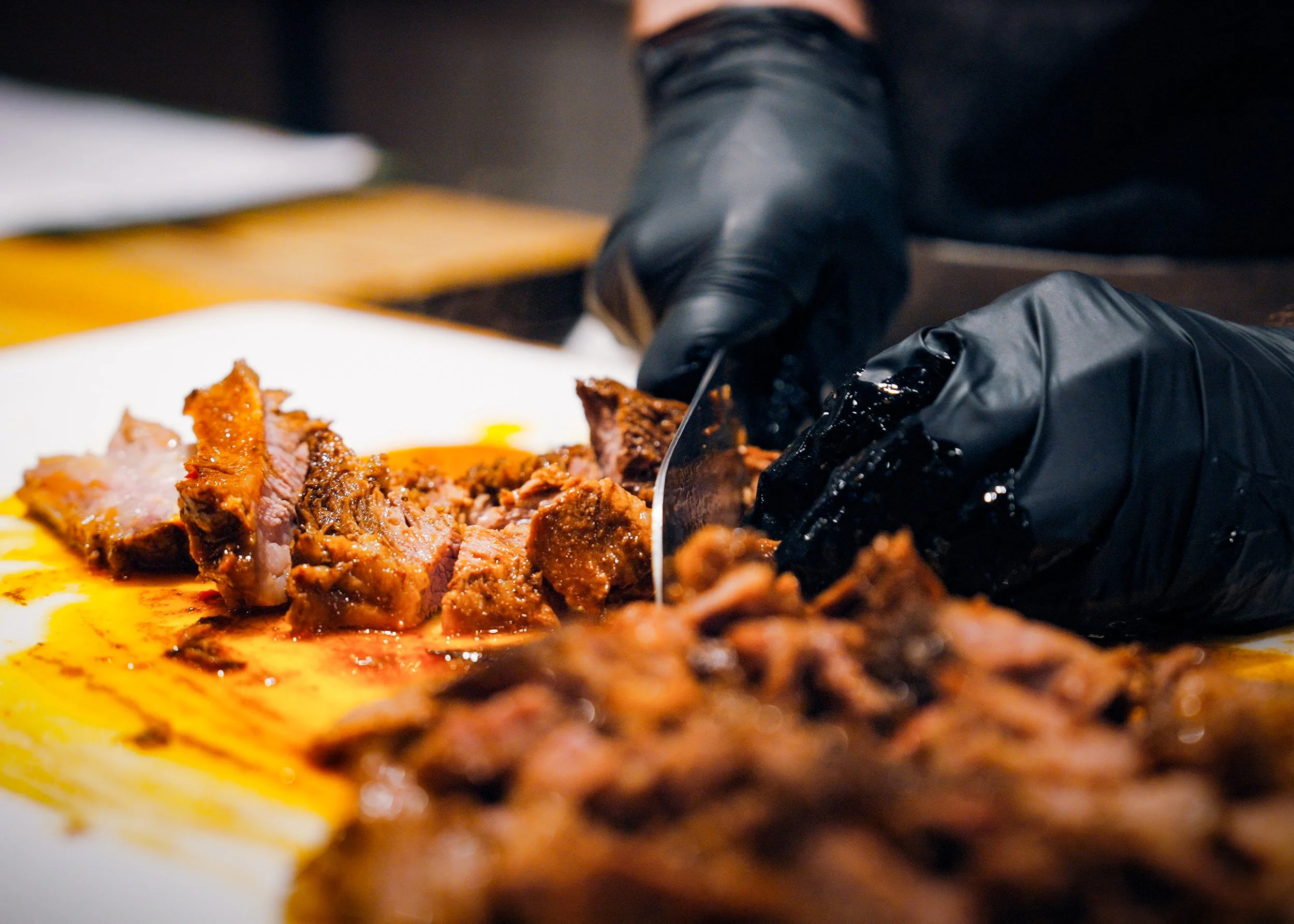
Live fire cooking produces flavors that are impossible to imitate. Smoke adds depth without overwhelming. Fat dripping onto coals creates aroma before a plate ever reaches the table. Vegetables blister and sweeten. Bread develops a crackling crust. Meat forms a deeply caramelized exterior while remaining tender within.
But flavor is only part of the story.
Fire changes the rhythm of a kitchen.
It slows you down.
Not because it is inefficient, but because it refuses to be rushed. You don't command a fire. You tend it. You feed it. You learn its moods. Some days it burns fiercely. Other days it asks for patience.
That posture feels deeply aligned with Priory.
We are drawn to methods that reward care over convenience. Fermentation asks us to wait. Whole animal cooking asks us to plan. Bread asks us to trust time. Fire asks us to remain present.
None of those things can be automated without losing something essential.
We don't believe every dish should taste smoky. Live fire is not about covering everything in ash and char. Used thoughtfully, fire becomes another seasoning.
Sometimes it brings bitterness.
Sometimes sweetness.
Sometimes crisp edges that give way to soft interiors.
Sometimes only the faintest hint of smoke lingering behind the main ingredient.
The goal is never to make food taste like fire.
The goal is to let fire reveal something already present.
A cabbage becomes sweeter.
An oyster mushroom becomes meatier.
Peaches become richer.
Chicken skin becomes impossibly crisp.
Bread develops complexity from a few moments over glowing embers.
Ingredients speak differently when they meet flame.
Fire also creates texture.
Much of great cooking lives in contrast. Crisp against tender. Char against sweetness. Crunch beside creaminess. A grilled scallion folded into cultured butter. A roasted tomato alongside fresh herbs. Smoked mushrooms served over creamy grits. A steak with a deeply caramelized crust resting beside bright pickled vegetables.
Fire gives us another language for building those contrasts.
Perhaps more importantly, it creates atmosphere.
Anyone who has gathered around a campfire understands this instinctively. Fire has a way of slowing conversation. People lean closer. They stay longer. They tell stories. The crackling of wood becomes part of the evening.
Restaurants often focus on spectacle.
We are more interested in presence.
There is something profoundly hospitable about seeing food cooked over real flame. Guests don't simply receive the finished product. They witness part of the process. The smell of wood smoke, the glow of coals, the rhythm of turning meat or vegetables over the fire—these become part of the memory as much as the meal itself.
We think that's worth preserving.
Live fire also connects our influences.
Texas has always understood smoke.
Barbecue is one of the state's great culinary traditions because it transforms humble ingredients through patience and wood. The lesson isn't simply about brisket. It's about respecting time.
Japan understands charcoal with equal depth.
Yakitori, robata, and countless regional traditions demonstrate incredible precision over relatively small fires. Every skewer, every fish, every vegetable receives careful attention. The fire is never simply hot—it is managed with remarkable intention.
Priory lives somewhere between those worlds.
We admire the generosity of Texas barbecue and the precision of Japanese grilling. One teaches abundance. The other teaches restraint. Together they shape how we think about cooking over flame.
Our fires are rarely about excess.
They're about balance.
Enough smoke to add depth.
Enough heat to create contrast.
Enough restraint to let the ingredient remain itself.
That philosophy extends beyond meat.
Some of our favorite things to cook over fire aren't animal proteins at all.
Cabbage.
Broccolini.
Leeks.
Carrots.
Eggplant.
Mushrooms.
Peppers.
Even citrus.
Fire transforms vegetables without disguising them. It concentrates their sweetness while adding complexity. Suddenly a humble onion becomes worthy of the center of the plate.
That excites us.
We believe vegetables deserve the same respect as meat.
Fire helps us demonstrate that.
The same is true of bread.
Our pizza, our sourdough, and many of our baked goods are deeply connected to flame. Heat gives dough its final expression. Fermentation prepares it. Fire completes it.
The two belong together.
Like so much of our work, live fire also reminds us of our limitations.
No matter how experienced a cook becomes, fire remains unpredictable. Wind changes everything. Moisture changes everything. Different woods burn differently. Every service requires adjustment.
Humility is built into the process.
We welcome that.
It keeps us learning.
It keeps us paying attention.
It keeps us from believing we've mastered something that continues to surprise us.
In many ways, live fire is a picture of the kind of hospitality we hope to practice.
It requires preparation before anyone arrives.
It demands care throughout the evening.
It creates warmth that others can gather around.
And when the meal is over, someone stays behind to tend the remaining embers, preparing for tomorrow's fire.
Hospitality works the same way.
Most of its beauty comes from quiet acts of care that happen long before the guest ever notices.
At Priory, we cook with live fire not because it is dramatic or nostalgic.
We cook with it because it teaches us to be present.
To tend rather than control.
To respect ingredients.
To embrace patience.
And to remember that some of the oldest ways of cooking still have the power to bring people together.
After all, before there was a dining room, there was a fire.
And around that fire, there was a table waiting to be imagined.