
Fermentation:
Fermentation is at the heart of everything we do.
Not because it's fashionable. Not because every dish needs to be sour. Not because every shelf should be lined with jars.
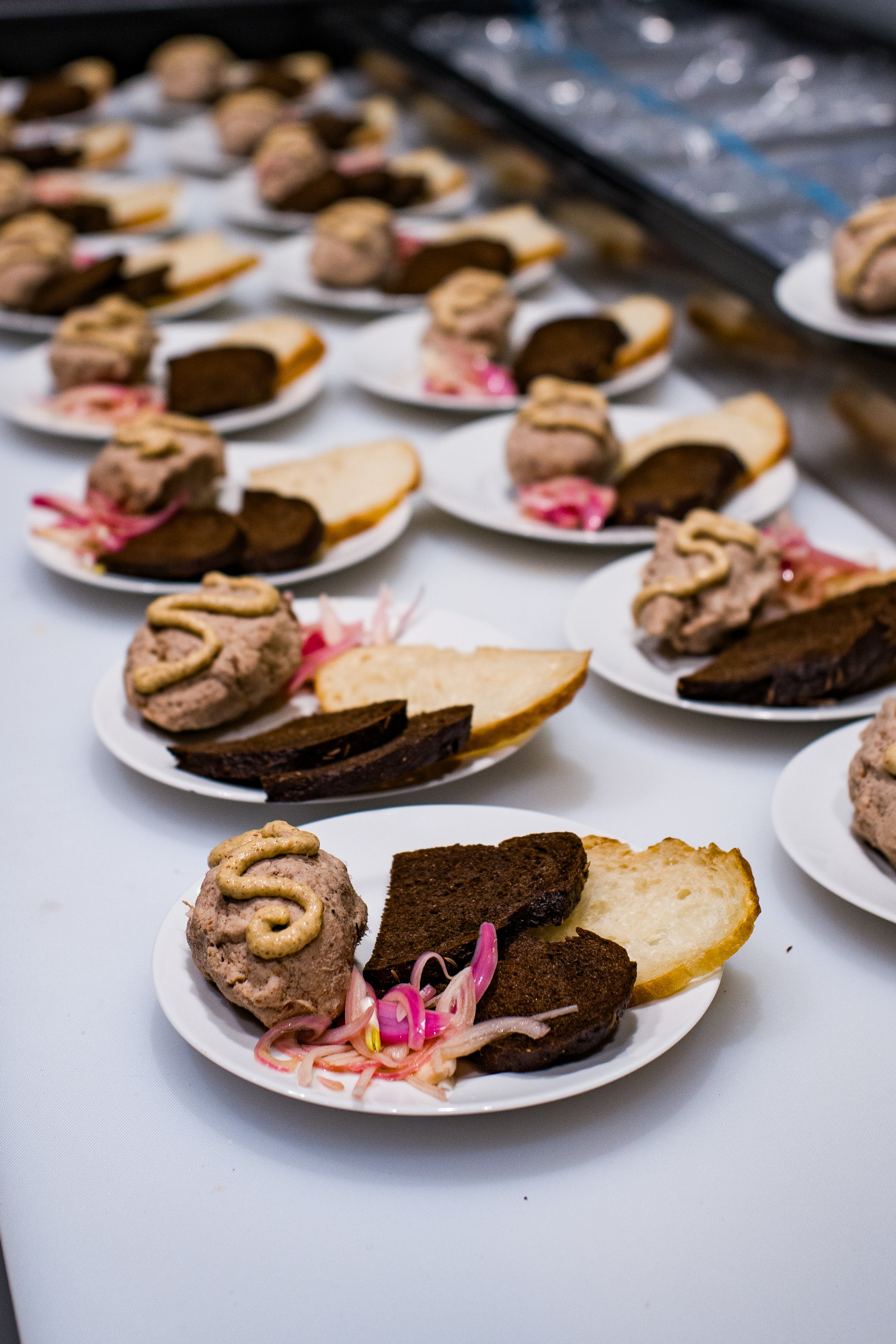
We believe fermentation tells the story of civilization itself.
Long before refrigeration, people learned that the invisible world could become a partner rather than an enemy. Wild yeasts transformed grain into bread. Bacteria turned milk into cheese and yogurt. Grapes became wine. Barley became beer. Soybeans became miso and soy sauce. Cabbage became sauerkraut. Cucumbers became pickles. Time, salt, and microorganisms transformed ingredients into something more flavorful, more nourishing, and more enduring.
Entire cultures were built around these discoveries.
In many ways, fermentation is humanity's oldest collaboration.
It teaches us a lesson that feels increasingly rare: not everything valuable can be made quickly.
You cannot rush sourdough.
You cannot force a beer to mature.
You cannot hurry miso.
The work happens in its own time.
Our responsibility is not to control the process but to create the conditions where transformation can occur.
That idea has shaped Priory far beyond the kitchen.
It shapes the way we think about hospitality, business, craft, and community.
Our tagline is Shepherds of Fermentation because shepherds do not manufacture life—they care for it. They create safety, provide nourishment, and guide something living toward maturity. We believe fermentation deserves the same posture. It asks for observation more than intervention, patience more than urgency, and humility more than control.
The same is true of the communities we hope to build.
Good relationships ferment.
Trust ferments.
Craft ferments.
Ideas ferment.
A neighborhood doesn't become meaningful overnight. A restaurant doesn't become beloved because it opens with perfect branding. Those things develop over years of consistent care, countless shared meals, and the quiet work of showing up.
Fermentation reminds us to trust that process.
In practical terms, fermentation is woven throughout nearly everything we cook.
Bread begins with a living starter that has its own rhythms and personality.
Beer begins with grain, water, hops, and yeast, each influencing the final character of what ends up in the glass.
Cultured butter develops richness that cream alone cannot provide.
Pickled vegetables brighten a plate while preserving the harvest.
Koji unlocks sweetness and umami from grains, vegetables, and meat.
Miso adds depth that cannot be replicated by seasoning alone.
Vinegars provide balance.
Charcuterie rewards patience.
Every fermentation introduces complexity through time rather than through excess.
This matters because we are not interested in adding more ingredients simply to make food seem complicated.
We would rather make simple ingredients taste deeper.
A grilled cabbage with cultured cream, fermented chili, and toasted seeds can tell a richer story than a plate covered in unnecessary components.
Fermentation teaches restraint.
It also teaches us to pay attention.
Living foods are constantly changing. Temperature matters. Humidity matters. Salt concentration matters. Every batch is slightly different. A cook cannot simply memorize a recipe and expect identical results forever.
Instead, fermentation asks us to observe.
To taste.
To adjust.
To remain curious.
That humility is one of the reasons we love it.
There is always more to learn.
Fermentation also reminds us that decay and transformation are not the same thing.
To many people, fermentation initially appears strange. We are taught to fear foods that bubble, age, or change. Yet some of the world's greatest flavors exist precisely because ingredients were allowed to transform.
Blue cheese.
Kimchi.
Parmigiano-Reggiano.
Soy sauce.
Beer.
Wine.
Chocolate.
Coffee.
Sourdough.
Without fermentation, many of the foods we consider essential would not exist.
Rather than resisting change, fermentation embraces it.
That feels like an important lesson.
Our menu reflects this philosophy not by making fermentation the headline of every dish, but by allowing it to quietly shape flavor throughout the meal.
Sometimes it appears as house-made pickles alongside roasted meat.
Sometimes it is miso folded into butter.
Sometimes it is cultured cream beneath a tartare.
Sometimes it is a vinegar that brightens grilled vegetables.
Sometimes it is simply the beer in your glass.
Guests don't need to identify every fermented element for it to matter.
Much like salt, fermentation often does its best work in the background.
Beer deserves special mention because it is one of humanity's great fermented foods.
We don't see beer as merely a beverage that accompanies dinner. It is one of the foundational ingredients of Priory. Beer connects agriculture, craftsmanship, microbiology, hospitality, and celebration in a single glass.
Every collaboration beer we create begins with the same questions we ask about food.
What season are we in?
What story are we trying to tell?
What ingredients deserve attention?
How can patience make this better?
The answers shape both the beer and the meal.
Fermentation also encourages sustainability in practical ways.
When vegetables are abundant, we preserve them for future seasons.
When herbs threaten to disappear, we turn them into vinegars or ferments.
When dairy is cultured, it lasts longer while becoming more flavorful.
When grain is fermented, it becomes bread or beer that brings people together around the table.
Waste becomes possibility.
Scarcity becomes abundance.
Time becomes an ingredient.
Perhaps that is why fermentation has always carried spiritual significance across cultures.
It asks us to believe that unseen work matters.
Most of fermentation happens where no one is watching.
Inside a barrel.
Inside a crock.
Inside a loaf.
Inside a tank.
Transformation happens quietly.
Hospitality often works the same way.
Guests rarely see the dough being folded before sunrise. They don't see the pickles aging on shelves, the beer conditioning in tanks, the stock simmering through the night, or the hours spent tasting and adjusting.
Those hidden acts of care become visible only when someone takes the first bite.
We find that beautiful.
In a world increasingly driven by speed, fermentation quietly resists.
It reminds us that depth cannot be manufactured overnight.
That excellence grows through repetition.
That care accumulates.
That waiting is not wasted.
These convictions extend beyond our kitchen.
We hope Priory itself becomes something fermented.
Not built for immediate success or viral attention, but for steady growth.
A place whose reputation develops slowly through shared meals, generous hospitality, thoughtful craft, and relationships that deepen over years rather than months.
Because that's how fermentation works.
It begins with simple ingredients.
It asks for patience.
It trusts the unseen.
And if cared for well, it becomes something capable of nourishing people long after the work first began.
That is the kind of place we hope to become.
Not simply a place that serves fermented food.
But a place that lives by its wisdom.